


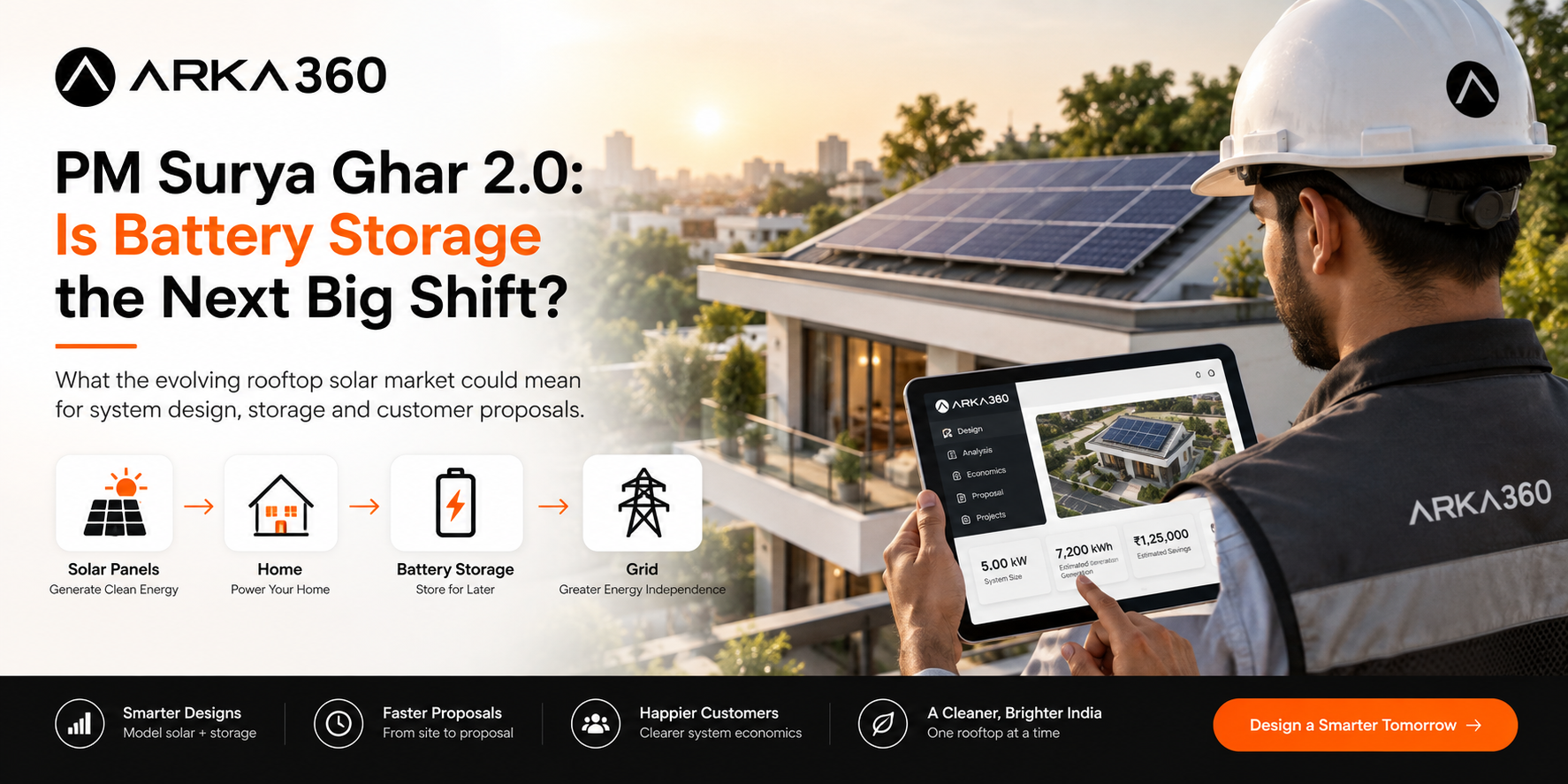
India’s residential rooftop solar market has moved into a very different phase.
PM Surya Ghar: Muft Bijli Yojana was launched to accelerate residential rooftop solar adoption across the country and bring solar power within reach of millions of households.
For solar installers and EPC companies, this has created a much larger residential solar opportunity.
But the next phase of rooftop solar may not be only about putting more panels on roofs.
The conversation is increasingly moving towards:
That is why discussions around a possible PM Surya Ghar 2.0 are important for the solar industry.
Not yet.
There is an important distinction between what is currently available and what is reportedly being considered.
As of September 2026, solar installers should not present PM Surya Ghar 2.0, or a residential battery subsidy under it, as a confirmed government benefit unless an official notification is issued.
The existing PM Surya Ghar: Muft Bijli Yojana remains the applicable scheme.
For installers, however, the broader direction of the market is still worth watching.
And one of the most significant areas is battery storage.
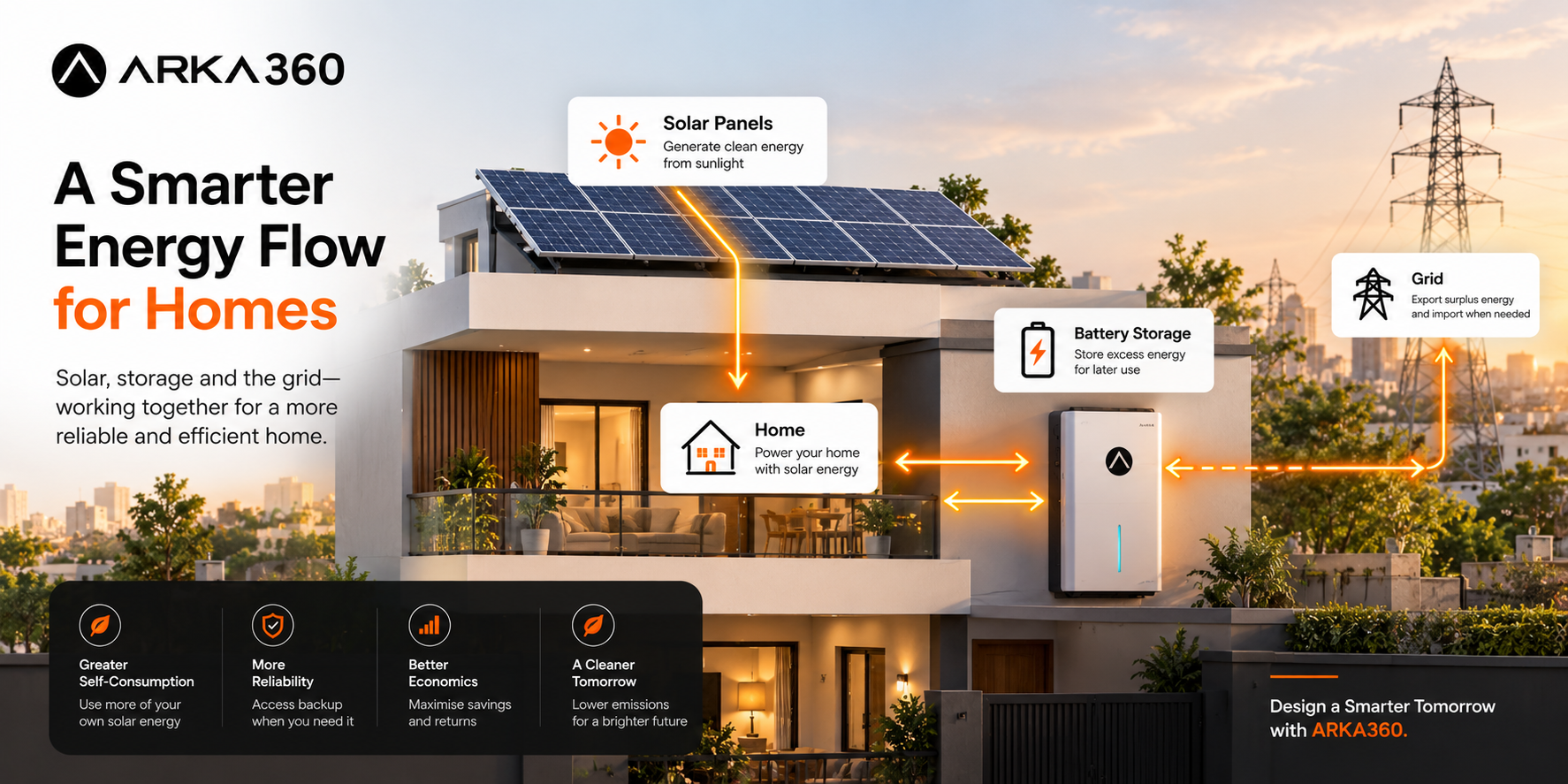
Traditional grid-connected rooftop solar has a simple limitation.
Solar panels generate most of their electricity during daylight hours. Household electricity consumption does not necessarily follow the same pattern.
A family may be away during the day and consume considerably more electricity in the evening, when air conditioners, televisions, kitchen appliances, lighting and other household loads are being used.
Without storage, surplus solar generation may be exported to the grid depending on the applicable metering arrangement.
Add a battery, and the equation begins to change.
Solar energy generated during the day can potentially be stored and used later.
That changes the customer conversation from:
“How much solar can fit on this roof?”
to:
“How should solar generation, household consumption and battery storage work together?”
For installers, that is a more sophisticated design challenge.
.png)
If residential battery storage becomes more widely adopted, simply selecting a 3 kW or 5 kW rooftop solar system may no longer be enough.
Installers may increasingly need to evaluate:
Two homes with similar monthly electricity bills may require completely different solar and storage configurations.
One household may use most of its electricity during the day.
Another may consume the majority of its electricity after sunset.
The system design therefore needs to understand the customer—not just the rooftop.
The existing PM Surya Ghar programme continues to provide financial support for eligible residential rooftop solar installations under the prevailing scheme guidelines.
However, installers need to be careful when discussing future battery-storage incentives.
A dedicated residential battery subsidy under a proposed PM Surya Ghar 2.0 should not be included in customer quotations as a confirmed benefit until it is officially notified.
This is particularly important when presenting project economics.
If an incentive is still under discussion, it should not be included in the customer’s projected investment or payback as though it is guaranteed.
While the final structure of any future programme remains subject to government notification, several themes are becoming increasingly relevant to India’s residential solar market.
Battery Storage
Battery energy storage could become more important as households look to use a greater share of their solar electricity themselves.
System Performance
The focus could increasingly shift from simply installing capacity to understanding how much energy rooftop systems actually generate.
Energy Management
Customers may want greater visibility into:
For installers, the direction is clear.
Design quality, generation estimates and system performance are becoming increasingly important.
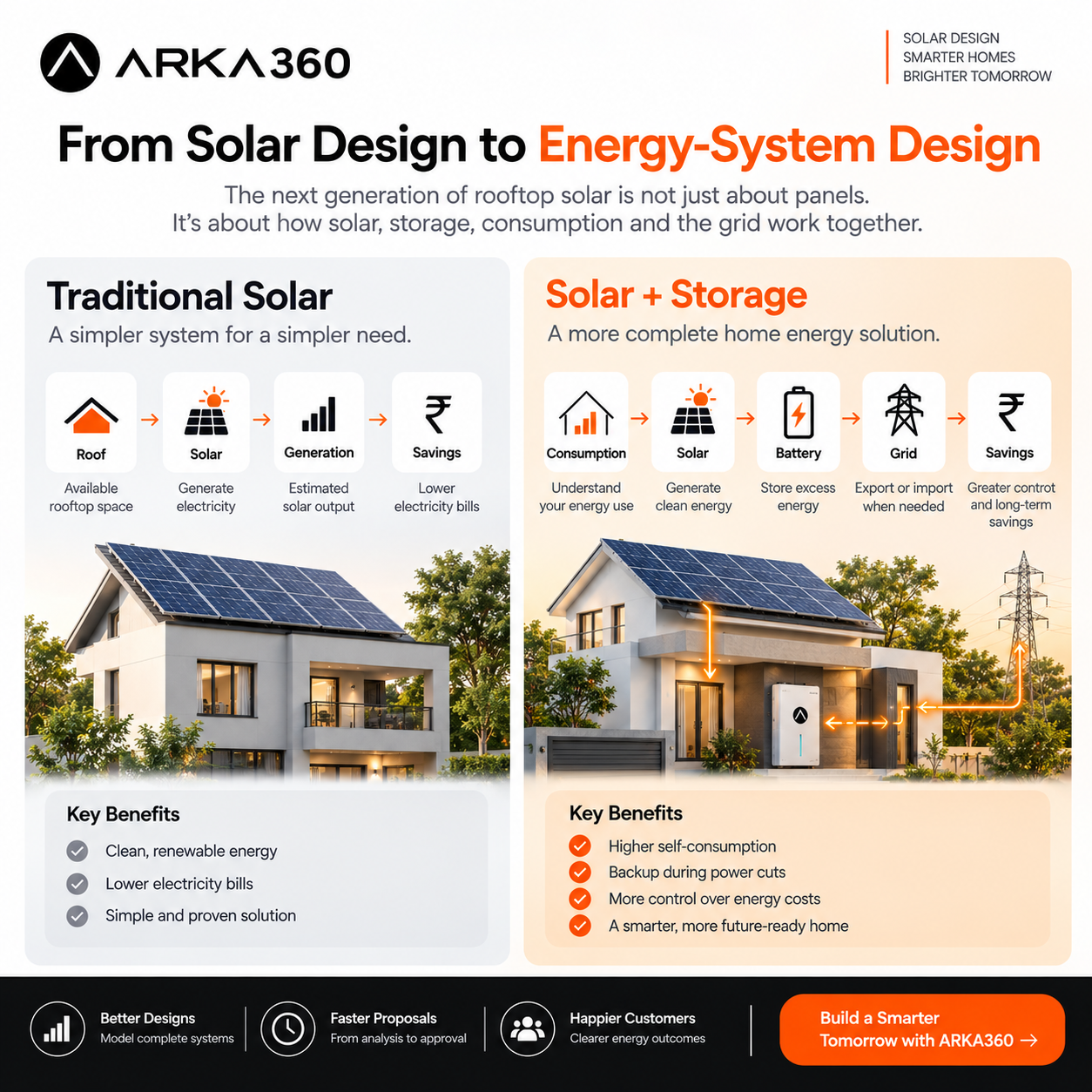
The role of solar design software is also beginning to evolve.
A traditional residential solar proposal might follow this journey:
Roof → Panels → Inverter → Generation → Savings
But the next generation of residential energy systems could increasingly look like:
Consumption → Roof → Solar → Generation → Storage → Self-Consumption → Grid → Savings
That is a more complex sales conversation.
And customers will expect installers to explain it simply.
Imagine a homeowner asking:
“Should I install 5 kW of solar with a smaller battery, or 3 kW with more storage?”
The answer should not come from guesswork.
It should come from understanding the customer’s roof, electricity usage, expected generation and system economics.
For EPCs and installers, the next phase of residential solar could create significant opportunity.
But it may also raise customer expectations.
Customers may increasingly want answers to questions such as:
That makes the quality of the design and proposal increasingly important.
As residential solar projects become more sophisticated, installers need tools that help keep the technical and commercial sides of the project connected.
ARKA360 is designed around the solar sales and design workflow.
Instead of treating design as a separate engineering activity, solar professionals can bring system design, project analysis and customer proposals closer together.
A more connected workflow can look like:
For installers handling multiple residential enquiries, having a repeatable process can help improve speed, consistency and customer experience.
A professional solar proposal should be more than a price quotation.
Customers need to understand what they are buying.
A strong solar proposal should clearly communicate:
System Size
How much solar capacity is being recommended?
Panel Layout
How will modules fit on the available rooftop?
Expected Generation
How much electricity could the proposed system generate?
Financial Impact
What savings could the solar system potentially deliver?
System Economics
What does the investment and expected payback look like?
As battery storage becomes more relevant, installers may also need to explain how storage could affect self-consumption, backup capability and project economics.
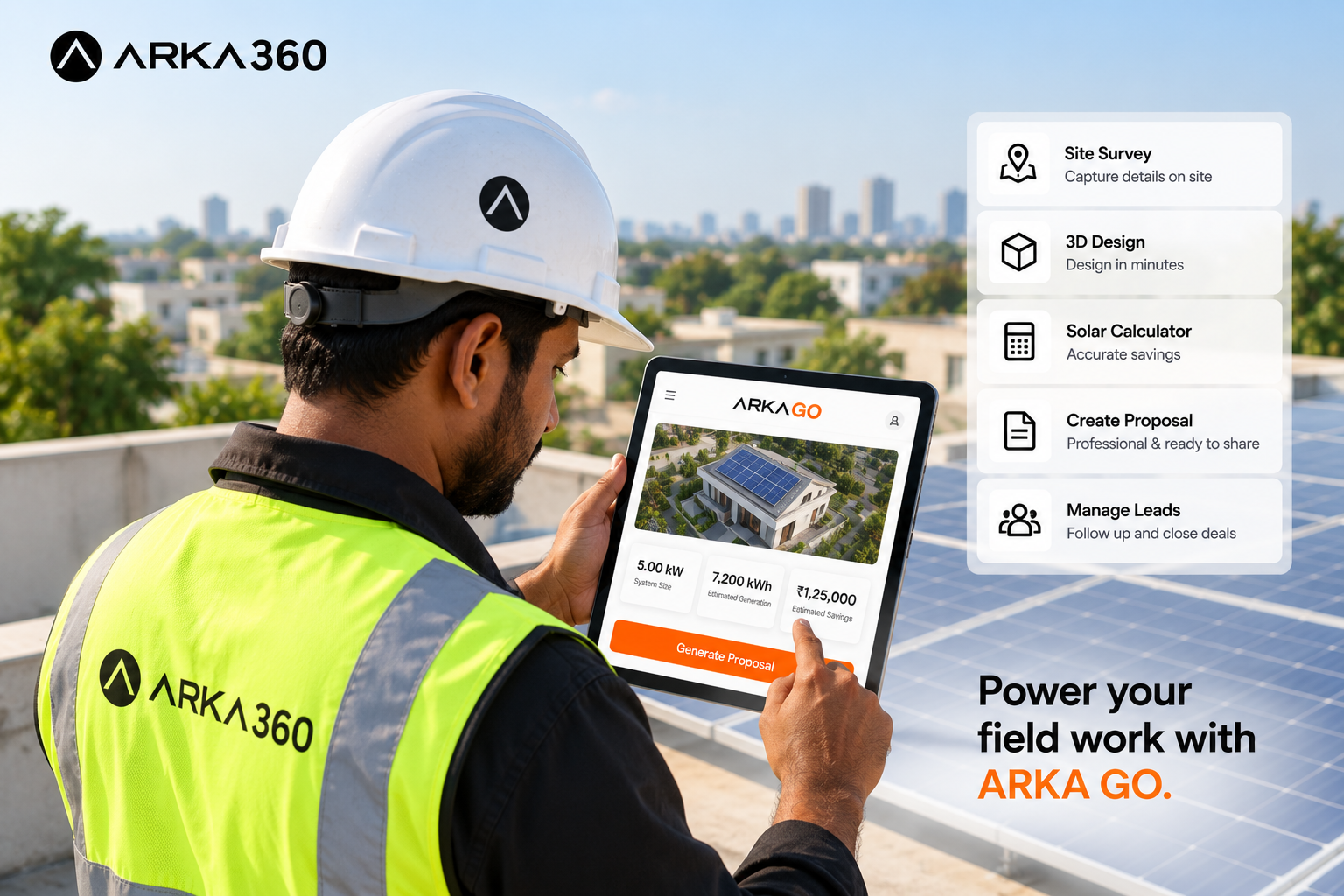
Residential solar sales do not happen only in an office.
Salespeople and installers may be:
This makes mobile access increasingly valuable.
The ARKA ecosystem extends the connected approach through ARKA Go, helping solar professionals access important sales capabilities while they are on the move.
The objective is to reduce the gap between:
The closer these activities happen to the customer interaction, the less sales momentum can be lost.
The absence of an officially notified PM Surya Ghar 2.0 programme does not mean installers should ignore the direction in which the market is moving.
It means they should prepare without promising benefits that have not yet been announced.
Three trends are worth preparing for now.
1. Customers Will Ask More Detailed Questions
Solar buyers are becoming more informed.
They will increasingly expect installers to explain generation, savings, system economics and potentially battery storage.
2. Proposals Will Need to Become More Sophisticated
A simple price sheet may not be enough.
Customers will want to understand why one system configuration is better for their home than another.
3. Speed Will Continue to Matter
Customers may compare quotations from several installers.
The ability to move quickly from site information to system design to a professional proposal can become a competitive advantage.
Solar customers do not need more technical complexity.
They need clarity.
When technologies, subsidies, system configurations and storage options evolve, the installer who can clearly explain:
is likely to have a stronger sales conversation than the installer who simply sends a price through WhatsApp.
That is where professional solar design and proposal software becomes part of the sales process—not simply an engineering tool.
PM Surya Ghar has already helped move residential rooftop solar further into the mainstream.
The next phase could increasingly be about making those systems:
The final shape of PM Surya Ghar 2.0—and any specific battery-storage subsidy—will depend on official government notification.
But installers do not have to wait to improve the way they design and sell solar.
Better designs. Better proposals. Better customer conversations.
Design professional solar systems, analyse project economics and create customer-ready proposals with ARKA360.
.png)

