


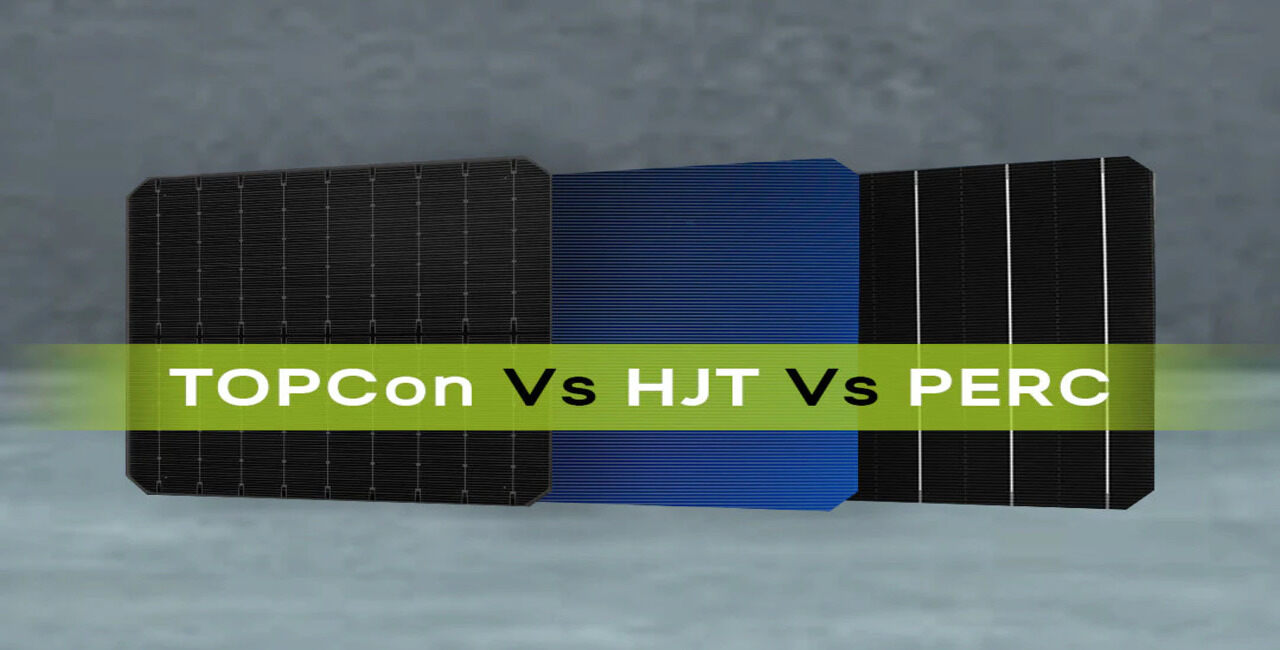
Today the conversation is about smarter materials, higher efficiency, longer life and better value for both homes and businesses. If you have been hearing terms like TOPCon, HJT and perovskite and wondering what they actually mean you are not alone.
This guide breaks everything down. No heavy science no confusing jargon and no overcomplication.
Before we jump into specific technologies, let us answer a very common question which is what are next-gen solar panels? In simple terms these are panels built using newer cell designs and materials that improve efficiency, durability and performance compared to traditional mono PERC panels.
The reason 2026 matters is that many of these technologies have moved from lab testing into mass production. Manufacturers are scaling faster, costs are stabilizing and installers are getting more confident using them in real world projects. So this is not future talk anymore, this is present-day solar.
Another factor is global demand. Energy prices are unpredictable and climate goals are getting stricter. Because of this solar manufacturers are under pressure to deliver panels that produce more power in less space while also lasting longer.
For years monocrystalline PERC panels ruled the market. They are reliable, affordable and easy to install. But they have limits. Efficiency gains have slowed and heat losses remain an issue in warm climates.
Traditional panels also struggle with long term degradation and light-induced losses. So while they still work well, the industry needed something better and more future-ready. That is why technologies like TOPCon solar panels and HJT solar panels started gaining attention.
Let us start with one of the most widely adopted technologies today which is TOPCon solar panels. TOPCon stands for Tunnel Oxide Passivated Contact. That sounds complex but the idea is actually simple.
In TOPCon panels a very thin oxide layer is added between the silicon wafer and the electrical contact. This layer reduces energy losses and helps electrons move more efficiently. As a result more sunlight gets converted into usable electricity.
One big reason TOPCon is popular is that manufacturers can upgrade existing production lines without rebuilding everything. That keeps costs reasonable and speeds up adoption.
TOPCon panels also perform better in low light conditions and they handle heat better than older designs. So they are ideal for residential rooftops, commercial systems and even large-scale solar plants.
TOPCon panels in 2026 regularly achieve efficiencies above 23 percent and some models go even higher. They also show lower degradation over time which means better output year after year.
Because of this many people see TOPCon as the safest upgrade path within next generation solar panels 2026.
Now let us talk about HJT solar panels which stand for Heterojunction Technology. This approach combines crystalline silicon with thin layers of amorphous silicon. Again the science sounds heavy but the benefit is very clear.
HJT panels reduce recombination losses and improve voltage output. This leads to higher efficiency and better temperature performance.
HJT panels usually offer efficiencies of 24 percent or more. They also perform exceptionally well in hot climates and have excellent bifacial performance when used in dual glass designs.
Another big plus is longevity. HJT panels degrade more slowly compared to many other technologies. So while they may cost a bit more upfront, they deliver better lifetime value.
The main challenge with HJT is manufacturing cost. It requires new equipment and very precise production processes. However as more factories scale up these costs are gradually coming down.
In 2026 HJT panels are increasingly used in premium residential systems and commercial solar projects where space and performance matter most.
.png)
Perovskite technology has been called revolutionary for years. The big question now is whether perovskite solar cells are ready for commercial use and whether they are truly ready.
Perovskites are a class of materials that absorb light extremely well. They can be layered on top of silicon cells to create tandem panels that dramatically increase efficiency.
The answer is yes but with limits. Perovskite panels are entering early commercial deployment mainly in pilot projects and premium installations.
Efficiencies above 30 percent have been demonstrated in labs and commercial modules are already exceeding 25 percent. That is a massive leap compared to traditional panels.
Earlier concerns around perovskite durability are being addressed. Manufacturers are improving encapsulation techniques and material stability.
While perovskite only panels are still rare hybrid silicon perovskite designs are becoming more realistic options within new PV panel technology.
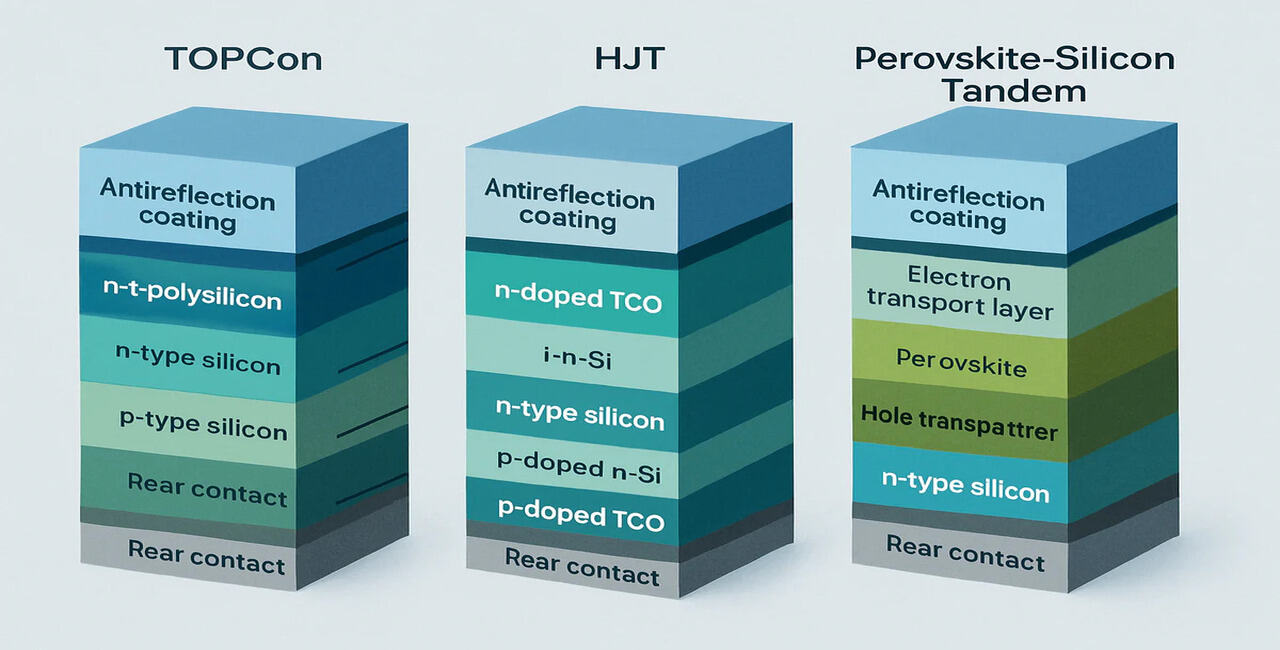
One of the most searched topics today is TOPCon vs HJT vs perovskite and for good reason. Let us compare them in a clear and simple way.
TOPCon offers the best balance of cost performance and scalability. HJT delivers top tier efficiency and durability but at a higher cost. Perovskite promises the highest efficiency but is still in early adoption stages.
If you want proven reliability TOPCon is a strong choice. If you want premium performance, HJT stands out. If you want future facing innovation, perovskite is exciting but still evolving.
So the question remains which solar panel technology is best in 2026?
For homeowners looking for value and long term reliability, TOPCon panels make a lot of sense. For businesses with limited roof space and high energy demand, HJT panels can deliver high returns. For innovators and early adopters, perovskite hybrids offer unmatched efficiency potential.
The most important thing is to choose the right panel for the location, budget and energy goals.
Advanced panels do more than boost efficiency. They also change how systems are designed. Higher efficiency panels reduce space requirements and improve design flexibility.
With tools that simulate shading orientation and output, installers can now design more accurate systems using next generation solar panels 2026. This results in better performance predictions and fewer surprises after installation.
Better efficiency means fewer panels for the same output. Better durability means lower maintenance and replacement costs. Better temperature performance means more consistent energy production.
All these factors contribute to higher return on investment which is why next-gen solar panels are no longer just a technical question but a financial one.
Before investing in these technologies, ask about warranty degradation rates and real world performance data. Also consider the experience of your installer and the quality of system design.
Not all panels are equal and not all installations maximize their potential. Smart planning matters as much as advanced hardware.

As panels become more advanced, design accuracy becomes critical. A high efficiency panel installed poorly will never reach its potential.
That is why modern projects rely on precise layouts, shading analysis and production estimates. Advanced design tools help match the right panel technology to the right project.
Q.1 What are next-gen solar panels and how are they different from traditional panels?
Ans. Next-gen solar panels use advanced cell technologies like TOPCon, HJT and perovskite to improve efficiency, durability and power output compared to older mono PERC panels.
Q.2 Which solar panel technology is best in 2026?
Ans. The best solar panel technology in 2026 depends on your needs. TOPCon offers a strong balance of cost and performance. HJT delivers higher efficiency and longer life while perovskite panels offer cutting edge innovation with very high efficiency.
Q.3 How efficient are TOPCon and HJT solar panels?
Ans. TOPCon solar panels typically achieve efficiency above 23 percent while HJT solar panels can exceed 24 percent with better performance in hot climates.
Q.4 Are perovskite solar cells ready for commercial use?
Ans. Perovskite solar cells are entering early commercial use in 2026, mainly as silicon perovskite tandem panels, though large-scale adoption is still developing.
Q.5 Should homeowners invest in next-generation solar panels in 2026?
Ans. Homeowners should consider next-gen solar panels in 2026 if they want higher energy output, better long-term performance and improved return on investment, especially when roof space is limited.
.png)
Solar technology in 2026 is no longer about incremental improvement. It is about leaps in performance reliability and value. Choosing between them is not easy you need to figure out how they fit into the system design and energy goals.
In the end the success of any solar project depends on smart planning, accurate design and clear proposals. ARKA 360 helps solar professionals design optimized systems and present them clearly using advanced solar design software so clients can confidently move forward with the right technology for their needs.

