


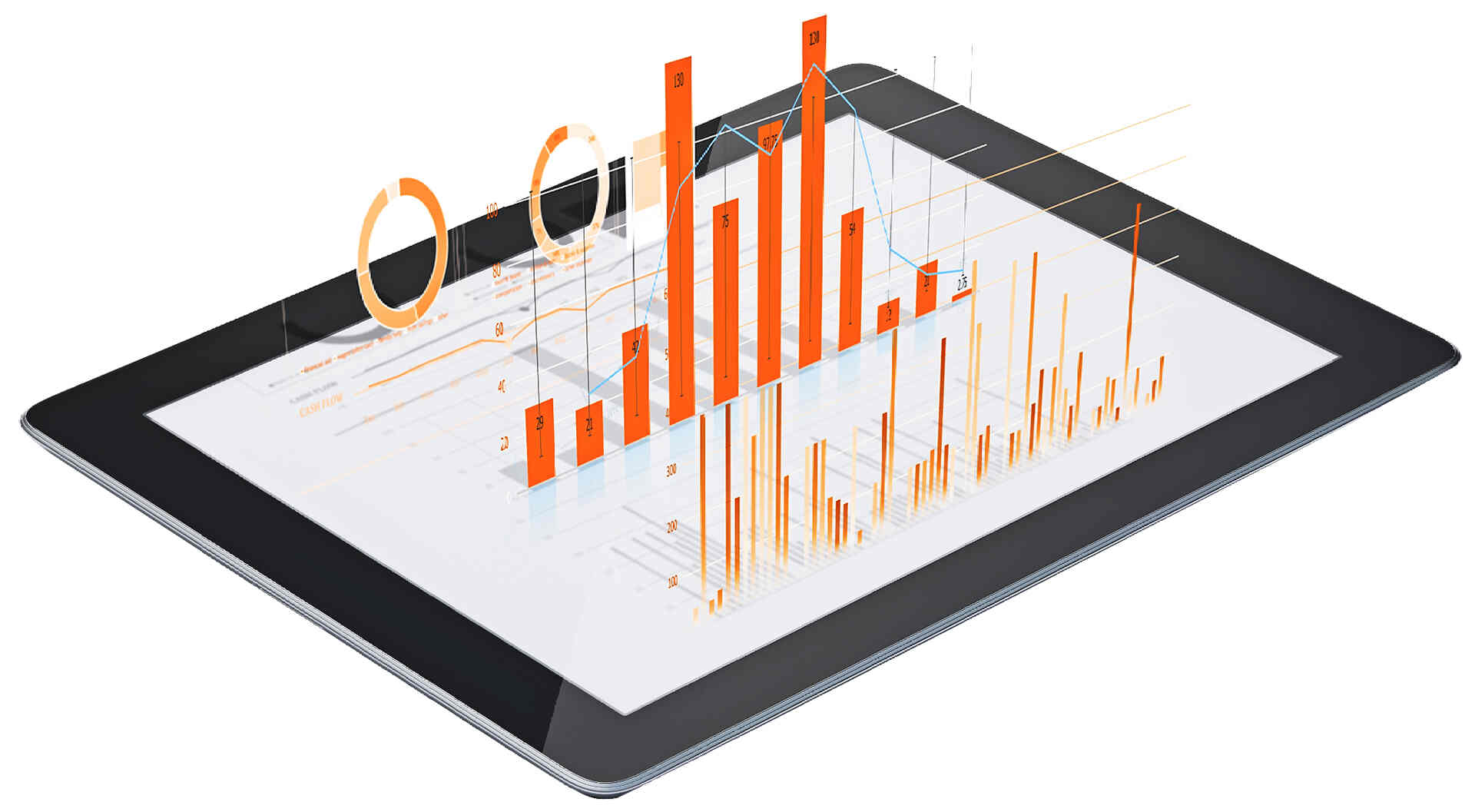
Bankable solar projects rely on precise yield predictions validated by lenders. Advanced solar design software increases accuracy by integrating high-resolution weather data, detailed shading analysis, inverter-specific performance modeling, and automated loss factor calculations. This improves financial confidence while reducing lender risk.
Today, the difference between an approved project and a delayed one often comes down to the modeling engine behind the proposal.
Bankability means a solar project carries predictable performance, low financial risk, and meets strict lender documentation standards. It is no longer about whether a system produces power. It is about how accurately production can be forecast.
Lenders now evaluate projects through probability models rather than best-case scenarios. Two numbers dominate this decision. P50 represents the expected output under normal conditions. P90 represents conservative performance with a 90 percent confidence level.
A wider gap between P50 and P90 signals higher uncertainty. That uncertainty raises interest rates or blocks funding entirely.
Loss factors also play a critical role. Every lender mandates clear breakdowns for soiling, temperature, mismatch, wiring, clipping, and degradation. If these numbers appear inconsistent or unsupported, the project is flagged.
Simulation reproducibility is another major factor. Different engineers must be able to run the same inputs and reach the same outputs. If results shift between designers, lenders see uncontrolled risk.
Bankable solar design now demands complete traceability. Every assumption must be documented. Every number must be auditable.
This level of transparency is what allows even low-credit customers to access asset-backed solar financing.
Every financing decision in solar revolves around a single number. Expected kilowatt-hours.
Yield projections determine revenue. Revenue determines debt coverage. Debt coverage determines whether the loan is approved.
When projected output drifts from reality, the consequences ripple through the entire project lifecycle. Even a 2 percent deviation can disrupt cash flow projections and reduce lender confidence.
Over-prediction is penalized the most. When a system underperforms relative to projections, lenders treat it as a breach of trust. Future projects from the same developer face stricter scrutiny.
Under-prediction is safer but limits project upside. It reduces valuation and weakens return metrics, especially in commercial rooftop and C&I projects.
Large EPC contracts now depend almost entirely on confidence in yield performance. Corporations sign long-term power purchase agreements based on the financial certainty of output.
Yield accuracy has stopped being an engineering metric. It is now a financial credential.
This precision is also what allows flexible financing for customers with limited credit. When production risk is tightly controlled, lenders offset borrower risk with asset performance.
.jpg)
Older modeling workflows were built for smaller project volumes and simpler roofs. In today’s demand for scale and speed, these methods introduce unacceptable risk.
Designers often import satellite images into CAD and manually trace roofs. Small tracing errors multiply across hundreds of modules. Tilt and azimuth inaccuracies directly distort yield projections.
Many tools still rely on coarse irradiance grids. These do not reflect localized weather conditions. Microclimates are ignored. This creates large output uncertainty in coastal and industrial zones.
Loss assumptions often live in spreadsheets. Two designers can apply different numbers for the same system. Lenders view this variability as structural risk.
Traditional tools simplify obstructions. HVAC systems, parapets, and neighboring buildings often get approximated. Hourly shading dynamics are lost.
EPCs struggle to maintain accuracy when hundreds of designers apply differing techniques. This lack of uniformity undermines enterprise-level trust.
As project size grows, these limitations become risk amplifiers instead of productivity tools.
.png)
Modern platforms eliminate uncertainty by tightening every link in the modeling chain. Accuracy is no longer dependent on individual skill. It is built directly into the system.
Advanced platforms rely on hybrid weather modeling. They combine satellite data, local ground sensors, and predictive atmospheric models.
This increases spatial resolution dramatically. Instead of regional estimates, output is calculated at site-specific granularity.
Continuous API-based updates keep irradiance libraries current. This ensures long-term models reflect changing climate patterns and not outdated historical averages. The result is tighter P50 forecasts and narrower P90 deviations.
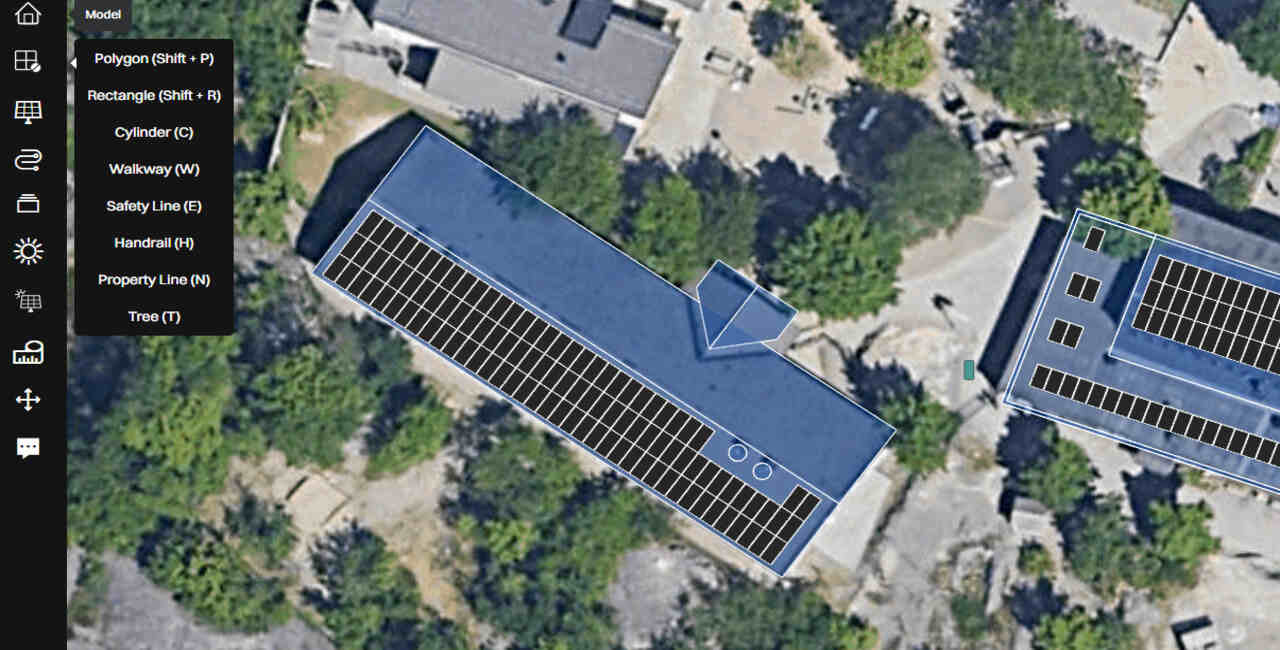
Artificial intelligence now reconstructs sites into full 3D environments directly from aerial imagery and LiDAR.
Roof planes are detected automatically. Tilt, azimuth, and surface area are calculated with precision. Obstructions emerge without manual tracing. This fully removes human geometry error from the process. Auto-generated digital twins now serve as the true physical base for yield simulation.
Modern tools model shading on an hourly or sub-hourly basis. Seasonal movement of the sun is factored into each module’s output curve.
AI horizon mapping detects far-field shading from terrain and distant buildings. This prevents overestimation in urban environments. Digital twins ensure the shading model matches the physical site.
Inverters no longer behave as static efficiency boxes. Today’s platforms simulate inverter efficiency curves, thermal behavior, and clipping in real time.
Each MPPT channel is modeled independently. This is critical for large commercial and utility layouts where string imbalances impact output.
Together, these layers form a closed-loop accuracy stack where each calculation validates the next.
Automation is not just about speed. It is about consistency.
Modern platforms enforce pre-set engineering design rules. Designers work inside governed environments where system sizing, spacing, tilt, and electrical constraints follow company-wide logic.
Loss factors are standardized. Soiling assumptions, degradation curves, wiring losses, and temperature coefficients are locked inside enterprise templates. Shading methodology becomes repeatable. The same digital twin engine applies identical horizon and obstruction logic across every project.
This creates repeatable outputs regardless of who designs the system. Onboarding becomes faster. Junior designers reach senior-level accuracy in weeks instead of years. The learning curve flattens dramatically. Human variability drops out of the equation.
For EPC leadership, this means predictable engineering quality across regions and teams. For lenders, it means uniform modeling logic across dozens of financed projects.
This controlled repeatability is what converts an internal engineering discipline into an external financial trust.
Lenders trust numbers only when they understand how those numbers were produced.
Advanced platforms automate probabilistic modeling. P50 and P90 outputs are generated directly from simulation variance rather than manual adjustments.
Degradation curves extend across multi-decade timelines. Soiling loss responds dynamically to regional environmental data. Module mismatch accounts for manufacturing dispersion. Wiring and conversion losses are computed from actual layout geometry.
Clipping is calculated using real inverter loading ratios rather than generalized rules. Each of these loss components becomes traceable and exportable inside engineering-grade reports. These transparent calculations directly strengthen project bankability.
Accurate loss modeling also improves LCOE optimization. When yield is no longer inflated, developers focus on genuine efficiency improvements instead of optimistic assumptions. Better derate control tightens cost per kilowatt-hour. That unlocks lower interest rates and longer debt tenors.
This is one of the strongest mechanisms supporting solar access for borrowers with low or limited credit. When the asset is predictable, the borrower profile matters less.
A 1.2 MW rooftop project suffered from over-conservative shading estimates. Advanced 3D modeling improved shading accuracy by 3 percent. The updated forecast narrowed the P50–P90 spread. Lenders reduced the risk premium on the loan. The result was over $200,000 in additional financing capacity without changing the system size.
An industrial customer faced past projects that had underperformed due to clipping losses. Dynamic inverter simulation uncovered MPPT bottlenecks in the initial design. The string configuration was adjusted before construction. This prevented a projected 4 percent underperformance and stabilized long-term cash flow for the site owner.
A utility-scale array located in a mixed industrial corridor faced heavy lender scrutiny. High-resolution irradiance modeling removed inconsistencies across financial review teams. Lender clarification cycles dropped from eight weeks to two. Construction broke ground a quarter earlier than scheduled. Across all three cases, improved modeling efficiency translated directly into financial leverage.
EPCs moving into high-volume, finance-heavy markets must hold their tools to higher standards.
Platforms should support multi-layer simulation across irradiance, shading, inverter behavior, and weather. High-resolution data sources must replace broad regional averages. Enterprise-grade accuracy controls should govern team-wide workflows. Automated derate templates must enforce consistency across thousands of systems. Engineering-grade exportable reports should satisfy the lender's technical review without additional documentation.
Digital twin modeling must fully represent rooftop and terrain physics. These features are no longer optional differentiators. They form the minimum baseline for large-scale solar operations in 2026.
Q1.) How accurate should solar yield modeling be for bankability?
Ans. Most lenders expect long-term forecasts within a 3 to 5 percent confidence band.
Q2.) Do lenders accept cloud-generated yield reports?
Ans. Yes. Cloud-based engineering platforms are now standard across finance and EPC workflows.
Q3.) Are AI-based simulations reliable?
Ans. When trained on verified physics models and regional data, AI extraction improves geometry accuracy significantly.
Q4.) How do soiling and degradation assumptions influence bankability?
Ans. Overstated degradation reduces valuation. Understated degradation increases default risk. Both impact financing terms.
Q5.) Does higher accuracy always reduce LCOE?
Ans. Not always immediately, but accurate modeling prevents hidden underperformance that inflates real cost over time.
.png)
In 2026, bankable projects begin with accurate, transparent, and lender-ready yield modeling. Advanced platforms eliminate guesswork by combining high-resolution data, 3D digital twins, automated loss factors, and consistent simulation standards across EPC teams.
This level of reliability does more than secure loan approvals. It expands solar access for customers with no or low credit by shifting financial confidence away from borrower profiles and toward verified asset performance.
ARKA 360 supports this transformation by enabling EPCs to produce lender-grade modeling with speed and consistency through its solar design software.
As yield expectations continue to rise, many EPCs are quietly turning to modern solar design and proposal software to strengthen approval confidence, unlock financing access, and deliver more truly bankable solar projects.

