


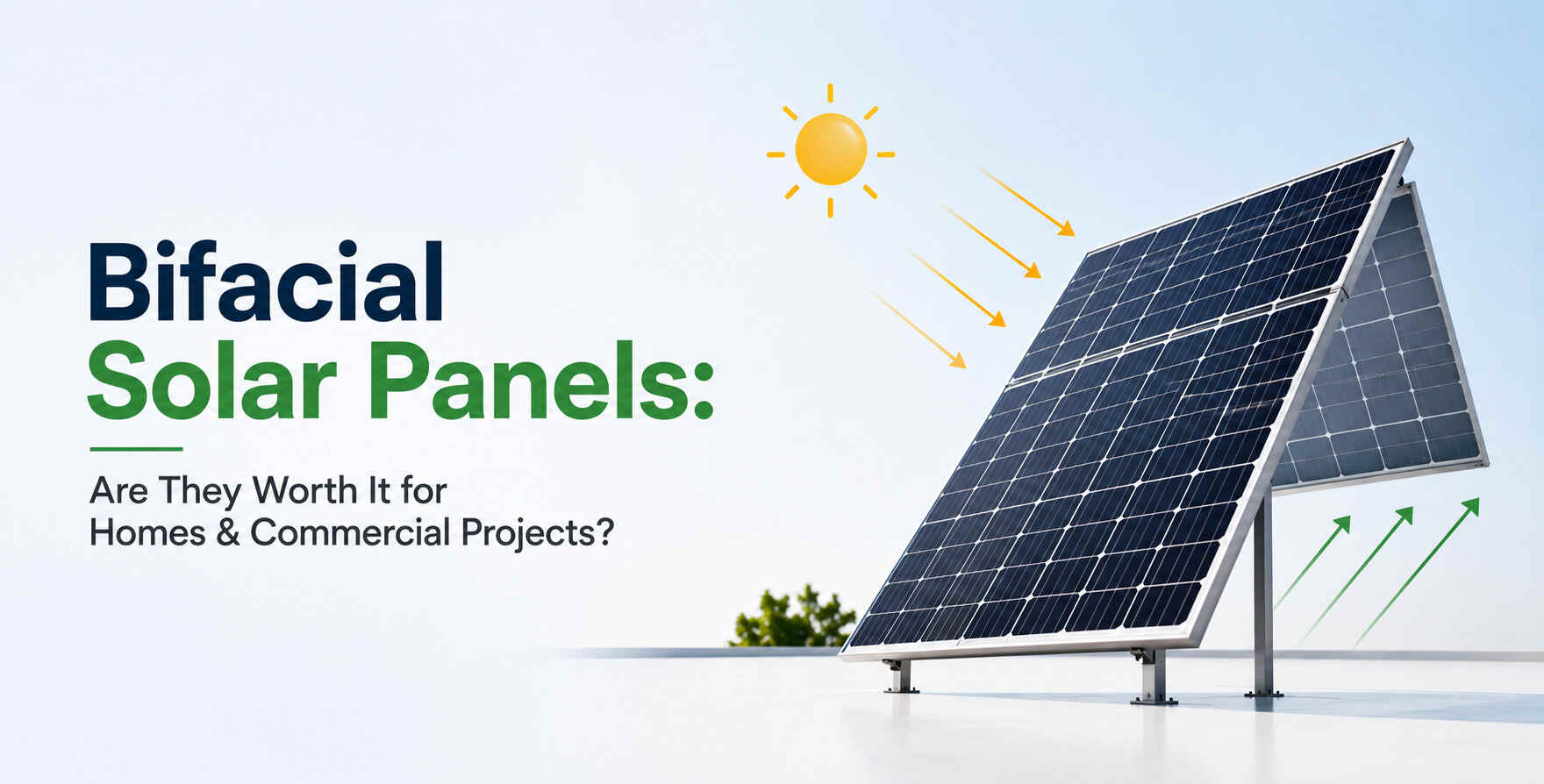
Bifacial solar panels are getting a lot of attention right now. Unlike regular solar panels, these panels can generate electricity from both sides.
Because of this, many people are now wondering if bifacial panels are actually better and whether they are worth the extra cost.
Another reason behind the growing popularity of solar technology is the quick growth of renewable energy.
According to the Ember Global Electricity Review 2026, renewable energy generated 33.8 percent of the world’s electricity in 2025 which marked the first time renewables produced more electricity than coal globally.
Solar power was one of the biggest contributors to that growth which led to bifacial solar panels gaining attention worldwide because it’s an advanced technology.
Now, let’s learn more about it.
Bifacial solar panels are solar modules designed to absorb sunlight from both the front and back sides of the panel. Traditional solar panels only use one side to generate electricity while bifacial panels use both.
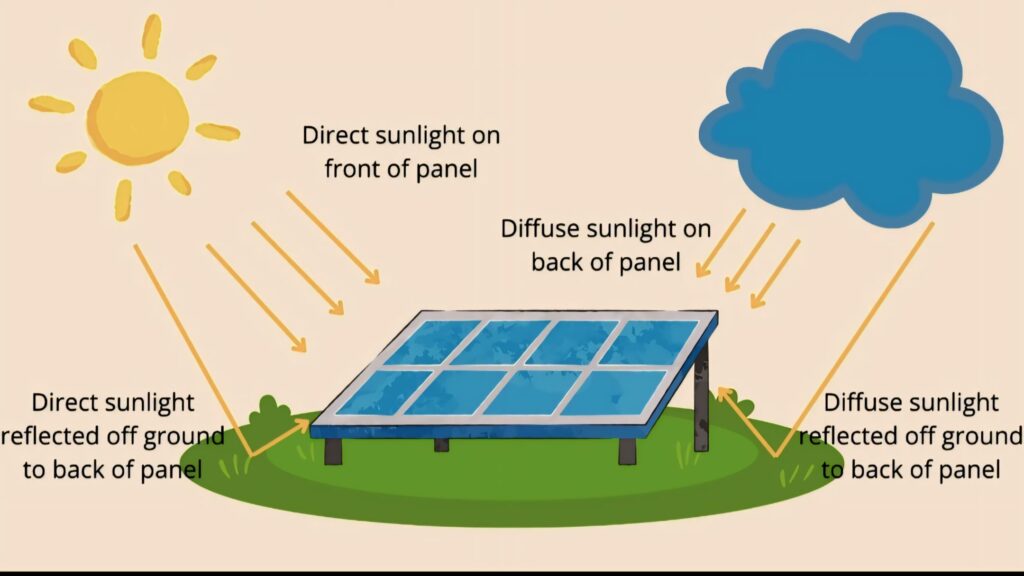
The front side captures direct sunlight just like a regular panel. The difference is that the rear side also captures reflected sunlight from surfaces below the panel.
That reflected sunlight can come from:
This extra energy collection helps increase overall power generation.
Most bifacial modules are made using glass on both sides which is why they are also called dual glass solar panels.
The design of dual glass solar panels is what makes them different from standard modules.
Instead of using a solid backing material, manufacturers place the solar cells between two protective glass layers. This allows sunlight to pass around the cells and reflect onto the back side of the panel.
The reflected light collected from the rear side is known as albedo light.
The more reflective the surface underneath the panels the more electricity they can generate.
For example, a solar installation above a white rooftop will perform better than one installed above a dark surface because white surfaces reflect more sunlight.
This is one reason why bifacial systems are becoming very popular for commercial rooftops, parking canopies and ground-mounted solar systems.
.png)
There are a few reasons why solar companies and property owners are paying more attention to bifacial technology.
The biggest reason is simple. Higher energy production.
But there are also several other important advantages.
One of the biggest bifacial solar benefits is increased electricity output.
Because these panels generate power from both sides, they can produce more energy than traditional panels. Depending on the installation conditions, bifacial systems can generate anywhere between 5 percent and 30 percent more electricity.
That additional energy can help reduce electricity bills faster over time.
Although bifacial systems usually cost more upfront, they can provide better long term returns because of their higher efficiency.
For commercial projects, this extra production can make a major difference over the lifetime of the system.
Most dual glass solar panels are designed with tempered glass on both sides which makes them more durable than standard panels.
They are generally more resistant to:
This added protection can help increase system lifespan.
Bifacial panels degrade more slowly compared to traditional panels. That means they continue producing strong energy output for many years.
For homeowners and businesses planning long-term solar investments, this is a major advantage.
Many homeowners also like the premium look of bifacial panels. The glass on both sides creates a cleaner and more modern appearance.
For residential installations, aesthetics can matter just as much as efficiency.
The conversation around bifacial vs monofacial panels has become much more common over the past few years.
Both technologies generate solar power but there are some important differences between them.
This is the biggest difference.
Monofacial panels only generate electricity from the front side while bifacial panels generate power from both sides.
That extra rear side generation helps improve total energy production.
Bifacial systems usually need elevated mounting structures so reflected sunlight can reach the rear side of the panel.
Traditional monofacial systems are easier to install because they do not rely on reflected light.
Bifacial systems generally cost more upfront because of advanced materials and mounting requirements.
However, the increased energy production can help offset those costs over time.
When comparing bifacial vs monofacial panels, bifacial technology usually works best for:
Monofacial panels are still a strong option for smaller residential rooftops with limited installation flexibility.
%20(1).png)
One of the biggest questions homeowners ask is whether bifacial solar panels are worth it for residential use.
The answer depends on your property setup.
In the right conditions, bifacial systems can work extremely well for homes. But in some cases, traditional panels may still make more sense.
Residential bifacial systems usually perform best when homes have:
These conditions help maximize reflected sunlight and improve rear side energy production.
Ground-mounted residential systems often benefit the most because sunlight can easily bounce underneath the panels.
Not every home is ideal for bifacial technology.
If your roof is heavily shaded or if the panels need to sit flush against the roof surface, the rear side gains may be limited.
In those situations, monofacial panels may offer better overall value.
That is why installation design matters so much when evaluating bifacial solar for residential use.
A lot of people assume bifacial panels automatically produce significantly more electricity in every situation. That is not always true.
Actual bifacial solar panel performance depends heavily on installation conditions.
Here are the biggest factors that affect performance.
Reflective surfaces increase rear side energy generation.
White rooftops, concrete snow and light colored ground surfaces usually improve bifacial output.
Panels installed higher above the ground generally perform better because more reflected light can reach the backside.
The angle of the panels affects how much reflected sunlight reaches the rear side.
Proper system design is important for maximizing energy production.
Heavy shading reduces both front side and rear side generation.
Open sunny spaces are ideal for bifacial systems.
Locations with strong sunlight and high reflectivity often achieve the best bifacial performance.
Commercial solar installations are often the perfect match for bifacial technology.
Large commercial rooftops and utility-scale projects provide ideal conditions for maximizing rear side energy production.
Commercial buildings usually have flat open rooftops with fewer shading issues.
This allows installers to optimize panel placement more effectively.
Even small efficiency gains can create major savings when scaled across hundreds or thousands of panels.
That is why many utility-scale solar farms are now switching to bifacial systems.
Parking canopies are another great application for bifacial technology because sunlight can reflect from the ground onto the back side of the panels.
This increases energy generation while also providing shaded parking.
While there are many advantages, there are also some limitations to consider.
Bifacial systems usually cost more than standard solar installations.
The panels and mounting structures can increase total project expenses.
System design is more important with bifacial technology.
Poor installation can reduce rear-side performance and limit expected energy gains.
Some rooftops simply do not provide enough reflected light to make bifacial systems worthwhile.
That is why site evaluation is extremely important before installation.
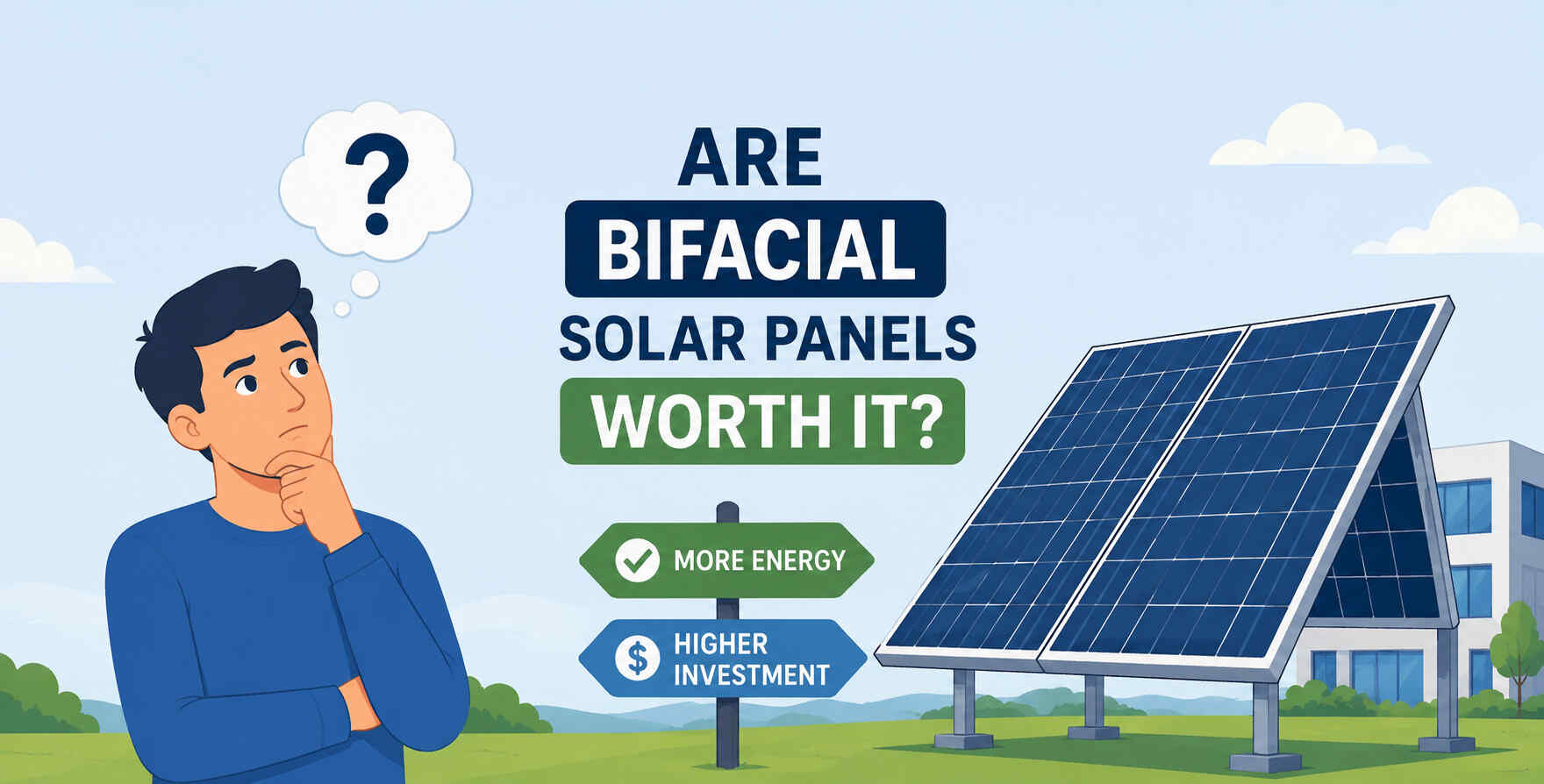
For many projects, yes, they absolutely can be.
If your property has strong sunlight, open installation space and reflective surfaces, bifacial systems can generate noticeably more electricity over time.
Commercial projects often see the biggest benefits because they have more flexibility in system design.
For homeowners, the value depends on roof type, shading and installation setup.
The key is understanding that bifacial technology is not automatically better in every situation. The real advantage comes from installing the system correctly and maximizing rear-side energy collection.
The solar industry is moving toward higher efficiency and longer-lasting technologies and dual glass solar panels are expected to play a major role in that future.
Manufacturers are continuing to improve:
As prices continue to become more competitive, bifacial systems will likely become more common for both residential and commercial projects.
Q. 1 What are bifacial solar panels?
Ans. Bifacial solar panels are solar modules that generate electricity from both the front and rear sides of the panel.
Q. 2 Are bifacial solar panels worth it for residential homes?
Ans. They can be worth it for homes with flat roofs, open spaces and strong sunlight exposure. The installation setup plays a major role in overall performance.
Q. 3 What is the difference between bifacial vs monofacial panels?
Ans. Monofacial panels only collect sunlight from the front side while bifacial panels collect sunlight from both sides.
Q. 4 Do dual glass solar panels last longer?
Ans. Yes. Most dual glass solar panels are designed for better durability and lower long-term degradation.
Q. 5 How much better is bifacial solar panel performance?
Ans. Depending on installation conditions, bifacial systems can generate 5 percent to 30 percent more electricity than traditional panels.
Q. 6 Is bifacial solar for residential use growing in popularity?
Ans. Yes. More homeowners are considering bifacial systems because of rising energy costs and better long term efficiency.
Bifacial solar panels offer higher efficiency, stronger durability and improved energy generation especially when installed in the right conditions. However, the success of a bifacial system depends heavily on smart planning, proper installation and accurate system design.
For solar companies and EPCs using the right tools can make that process much easier. Platforms like ARKA 360 help simplify planning, visualization and proposal creation while improving project accuracy through advanced solar proposal software.

